
Wayne County Probate Court
North Carolina does not use a separate county probate court for Wayne County. The Wayne County Clerk of Superior Court serves as ex officio judge of probate and handles estates through the Clerk's Office. That means the same elected clerk who maintains Superior Court and District Court records also performs probate judicial functions. Estate openings, wills filed after death, administrations, inventories, accountings, guardianship matters, incompetency proceedings, and certain special proceedings route through the Clerk of Superior Court rather than a county Register of Deeds or a separate probate judge.
The practical office is the Wayne County Courthouse, 224 E. Walnut St., Room 230, Goldsboro, NC 27530. The clerk's main phone number is (919) 722-6100. Office hours are Monday through Friday, 8:30 a.m. to 5:00 p.m. The courthouse page includes a local instruction that matters for estates: Clerk Whitfield asks visitors to arrive before 4:30 p.m. when opening new estates, upsetting bids, or making payments. Estate openings can take more time than a quick copy request.
Clerk of Superior Court as Ex Officio Judge of Probate / Estates Division
Wayne County Courthouse
224 E. Walnut St., Room 230
Goldsboro, NC 27530
(919) 722-6100
Monday-Friday, 8:30 a.m.-5:00 p.m.
Wayne County Estate Opening
Opening an estate is not just a search request. The person handling the estate must determine whether administration is needed, locate the original will if there is one, and bring the matter to the Clerk of Superior Court. The clerk may supervise qualification of a personal representative, filings tied to inventories and accountings, creditor issues, and closing papers. North Carolina also has simplified procedures for some estates, but the research did not capture current thresholds or every form detail, so those details should be checked against current Judicial Branch estate forms before filing.
The N.C. Judicial Branch estates page explains how estates and wills work in North Carolina.
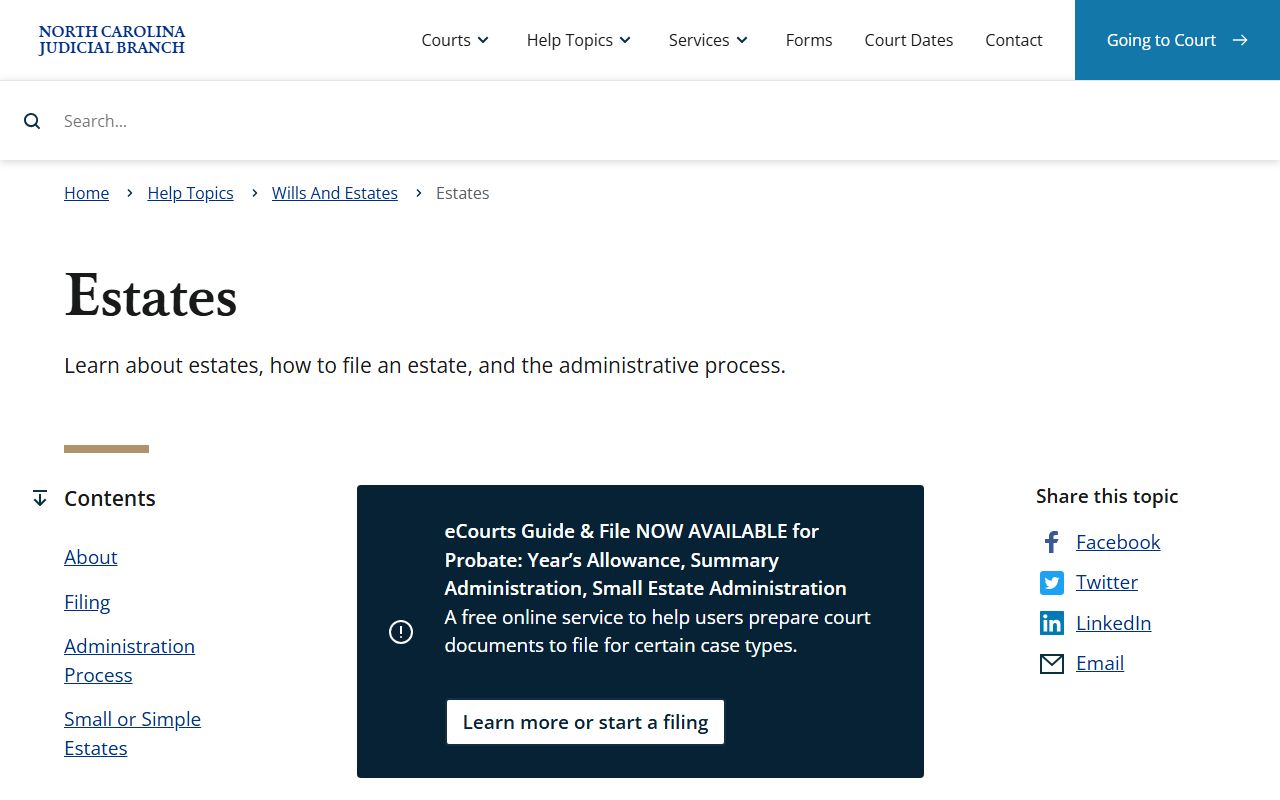
That state help topic is useful for understanding probate steps, while Wayne County's Clerk of Superior Court remains the local filing office.
- Decide whether the decedent left property that requires estate administration.
- Locate the original will if one exists.
- Contact or visit the Wayne County Clerk of Superior Court before filing.
- Arrive before 4:30 p.m. if opening a new estate.
- File the will after death and apply to qualify as executor or administrator when appropriate.
- Use the clerk's instructions for notices, inventory, accountings, creditor steps, and final distribution.
Wayne County Probate Terms
Probate records use terms that differ from ordinary civil cases. A Wayne County estate file may identify a decedent, a will, a personal representative, heirs, creditors, guardians, or parties to a special proceeding. These terms help a requester search by the correct name and ask for the correct document.
- Testator
- The person who made a will.
- Executor
- The person named in a will to carry out estate duties after qualification by the clerk.
- Administrator
- A person appointed to handle an estate when there is no qualified executor.
- Intestate
- Dying without a valid will.
- Guardianship
- A court or clerk proceeding that appoints someone to make decisions for a minor or incompetent adult.
- Conservatorship
- A protective money-management term used in some states; in North Carolina, related issues usually appear through guardianship or incompetency proceedings.
Search Wayne County Probate Records
Wayne County probate records can start with the North Carolina eCourts Portal when the matter is public and available online. The Judicial Branch public-record request page routes criminal, civil, special proceeding, and estates case information to Search Portal. For older files, certified copies, non-digitized filings, or questions about sealed portions, the local fallback is the Clerk of Superior Court in Wayne County.
A filed will becomes a public record after death when filed with the clerk. The N.C. estates guidance states that any person may view a public record or request a copy for a fee. That public access does not mean every probate-related document is open. Guardianship, incompetency, medical, minor, adoption, or sealed materials may be limited by statute or court order.
| Search Field | Type | Notes |
|---|---|---|
| Portal Smart Search | Search | Can be used for estates and special proceedings where public access allows. |
| Search by Case Number, Party, or Attorney | Search | Linked from Wayne County local schedule resources. |
| County | Filter | Select Wayne to narrow statewide results. |
| Name, party, or decedent | Text | Try spelling variations when exact indexing is uncertain. |
| Case number | Text | Use the clerk-provided file number if known. |
Wayne County Probate Costs
Estate and special proceeding costs change by case type and are published through the North Carolina Judicial Branch current court-cost materials. The research located the current court-cost publication page and noted 2026 estates court-cost PDFs, but it did not capture the individual dollar amounts from those PDFs. For that reason, a person opening an estate should check the latest court-cost publication or call the clerk before bringing payment.
The current court-cost publications page is the official source identified for estate and special proceeding costs.
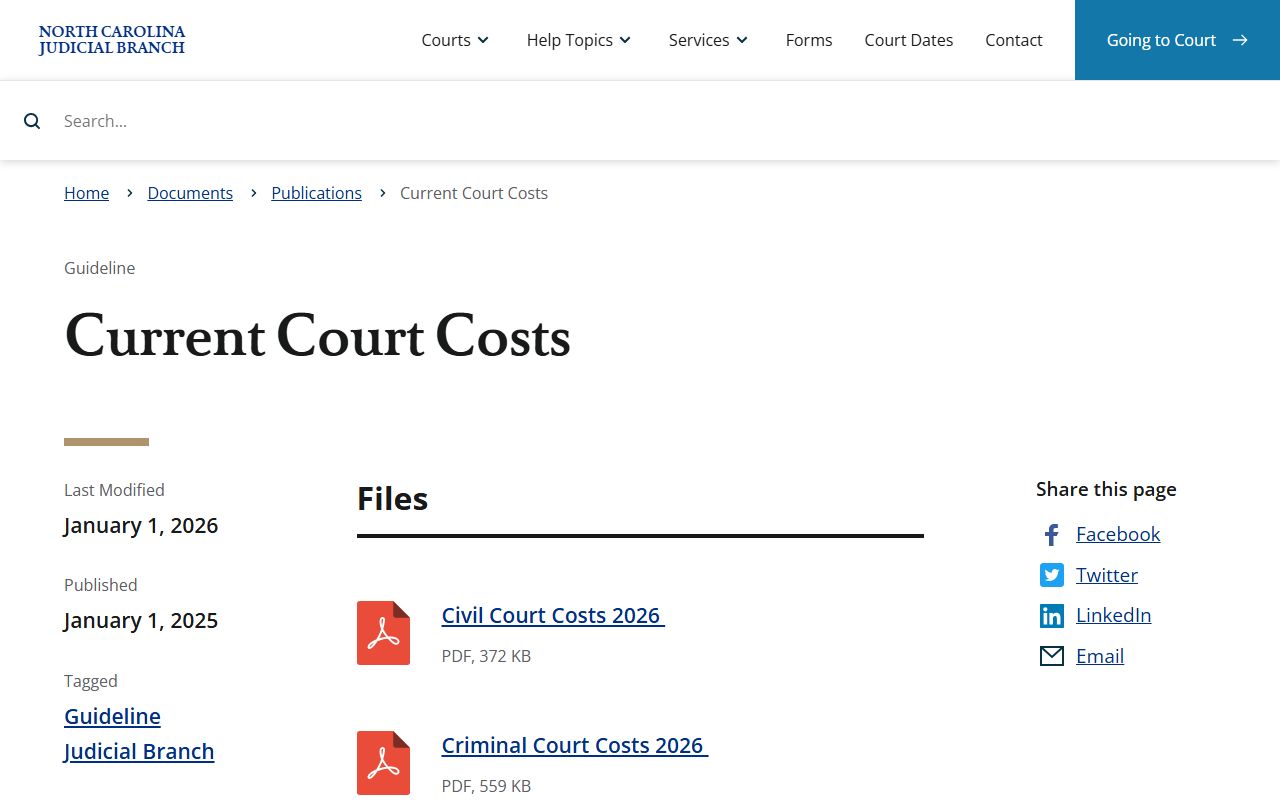
That publication source should be checked close to filing because the research did not preserve a Wayne-specific estate fee table.
| Probate Item | Amount or Source |
|---|---|
| Estate opening costs | Use current N.C. Estates Court Costs publication |
| Special proceeding costs | Use current N.C. court-cost publications |
| Certified or plain copies | Fee applies; exact amount not captured in research |
| Guardianship or incompetency filings | Confirm with clerk and current court-cost schedule |
Note: The courthouse page also asks visitors making payments to arrive before 4:30 p.m., even though posted clerk hours continue until 5:00 p.m.
Wayne County Will Records
A will is not a public probate record just because it exists in a private drawer. The N.C. Judicial Branch estates guidance says a will may be filed with a clerk of court after death and becomes a public record when filed. North Carolina does not require a formal meeting for a reading of the will. That point matters because family members sometimes look for a "will reading" record that does not exist as a required court event.
After a will is filed, copies may be requested from the clerk for a fee when public access allows. A search should use the decedent's name and any known estate file number. If the will was never filed, the clerk may not have a public record to provide. If an estate was opened but the online portal does not show the document needed, contact the Wayne County Clerk of Superior Court with the name, approximate death date, and any case number found in Portal.
Wayne County Special Proceedings
The Clerk of Superior Court also handles special proceedings tied to probate-adjacent issues. The research identifies guardianships, incompetency matters, foreclosures, partitions, and certain other proceedings as clerk functions. These files may look different from an ordinary estate administration file. Some have public orders and indexes, while sensitive medical, minor, or protected personal information may be sealed or redacted.
Adoption is a separate confidentiality issue. G.S. 48-9-102 protects adoption records from ordinary public inspection.
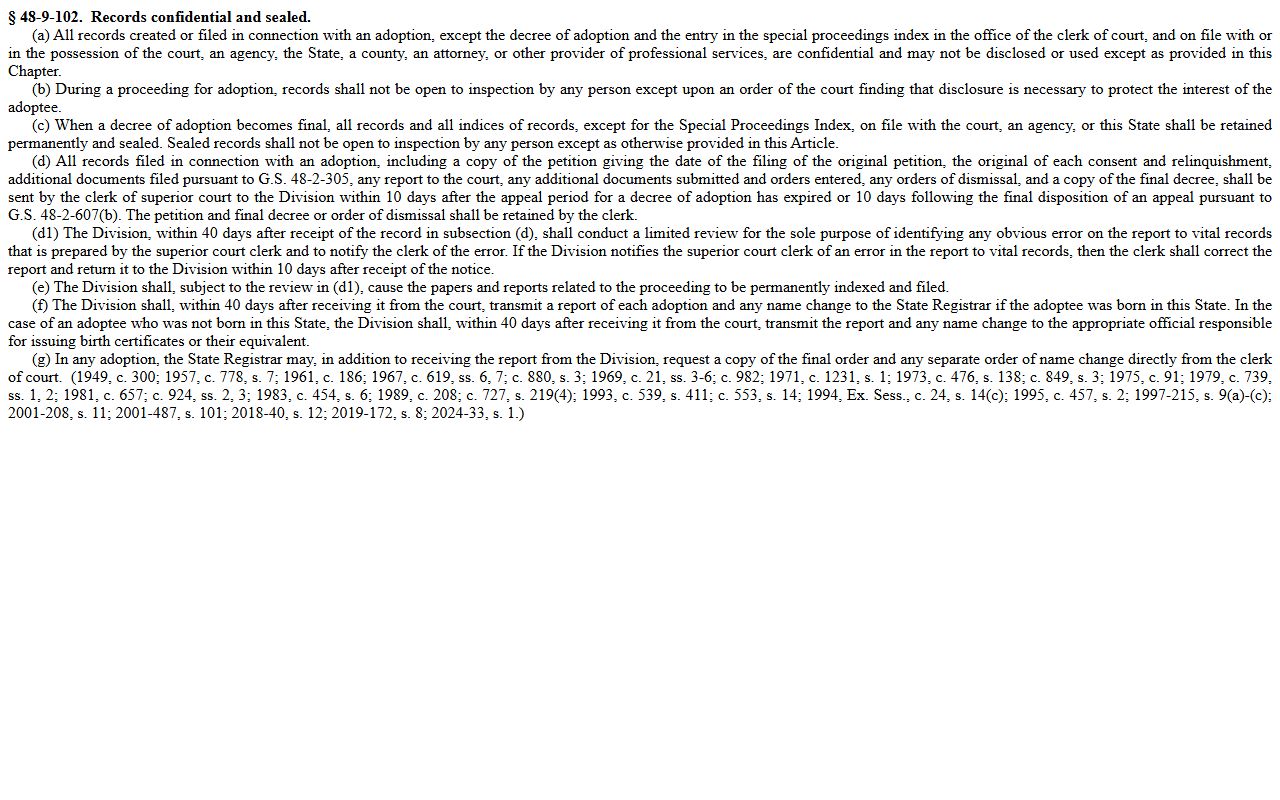
That statute is a reminder that not every clerk file connected to families, minors, or estates is available through public probate search.
Restricted Wayne County Probate Records
Public estate records are not the same as full access to every probate-related file. Guardianship and incompetency proceedings may include medical, financial, or personal facts that are restricted. Juvenile matters are restricted under North Carolina law. Adoption records are confidential under Chapter 48. Mental health and substance-use information may be protected by separate confidentiality rules. A portal result may show a case exists while withholding documents or details.
When a record is missing from Portal, the best next step is not to assume it does not exist. Contact the clerk with the party name, decedent name, case number if known, and document type. The clerk can explain whether the record is public, whether a certified copy can be issued, whether a fee applies, or whether access requires a court order.